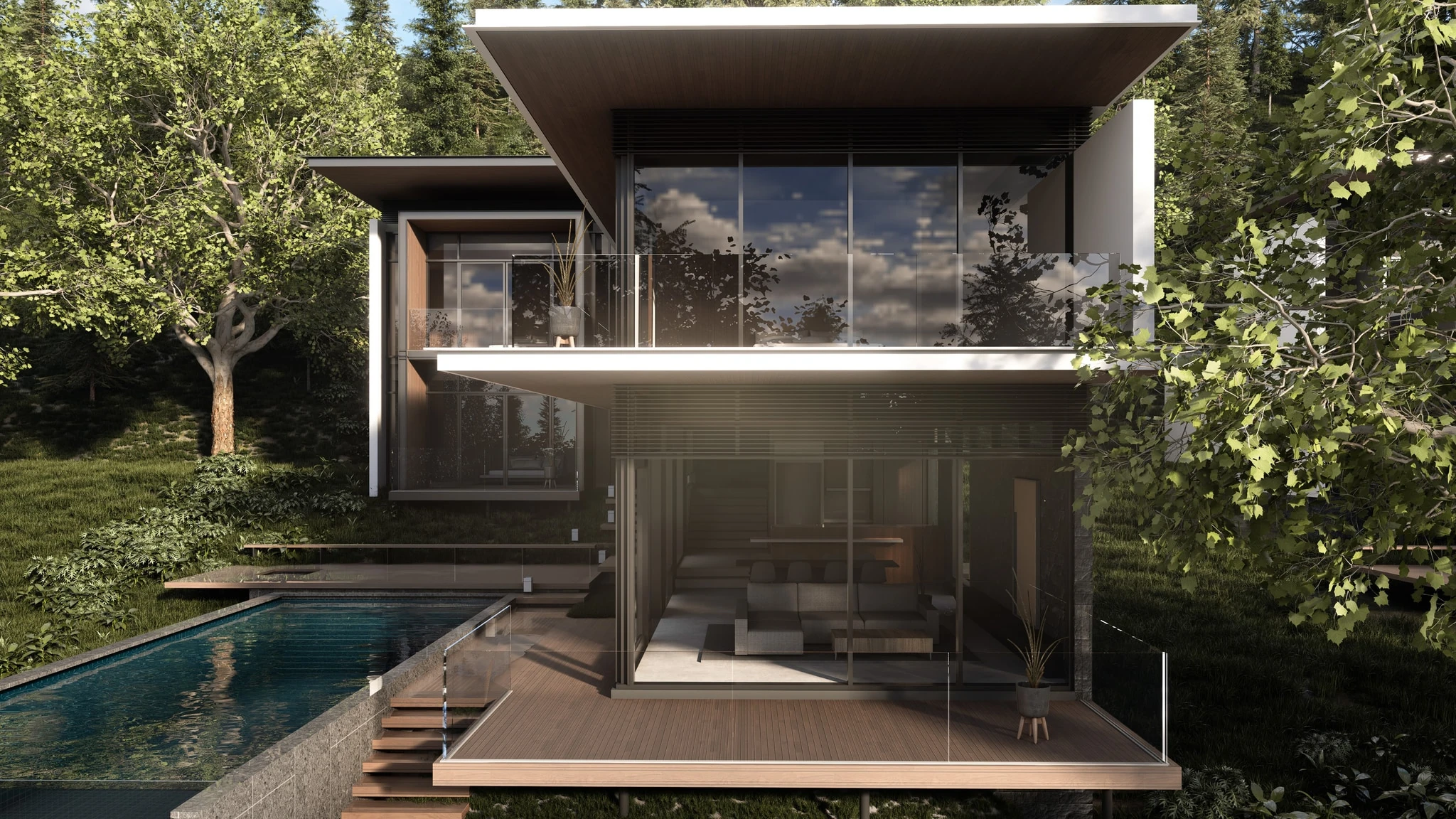
Concept / Portfolio StudyPortfolio piece showcasing studio capabilities and methodology.
3D Visualization of Tropical Villa for Real Estate Development
Concept / Portfolio Study · Exterior

Jungle Haven Villa

Nicoya Peninsula, Costa Rica2024Exterior

Services

  • Exterior Visualization
  • Environmental CGI
  • Pre-sales Marketing

Deliverables

  • 6 hero angles
  • Drone-perspective aerial
  • Day and golden-hour variants

Summary

Seamless integration of architecture and nature. The challenge was rendering thousands of individual plant assets while maintaining photorealism.

Project Credits

ArchitectInternational tropical-modernist practice (under NDA)DeveloperCosta Rica wellness-tourism developerLandscapeSpecialist tropical landscape consultantUsageInternational pre-sales marketing

The Challenge

Tropical environments are the hardest category in architectural visualization. Vegetation scatter, humidity haze, filtered canopy light — every common CGI shortcut becomes visible.

Our Solution

Four-zone procedural plant system with ecosystem-accurate species. On-site HDRI capture for authentic pre-sunset lighting. Dedicated environment workflow with extended timeline allocation.

The Result

Final imagery used by the developer for international marketing. The vegetation methodology developed for this project — multi-zone procedural scattering with ecosystem-specific libraries — informs all our tropical and coastal work.

Full Story

Jungle Haven Villa is a 6-bedroom private residence on Costa Rica's Nicoya Peninsula, commissioned by an international developer targeting wellness-tourism buyers. The architectural language is contemporary tropical — deep eaves, exposed timber, stone plinth — but the real subject of the visualization was never the building. It was the jungle.

Vegetation in architectural visualization is the single most common giveaway of amateur work. A building rendered at 5K can be undone by a single obvious tree instance, repeated six times across the composition. For Jungle Haven, we budgeted more time for environment than for the architecture itself.

Our approach used procedural scattering with four distinct plant zones: emergent canopy at 30+ meters, sub-canopy at 10-20 meters, understory at 2-5 meters, and ground cover. Each zone used a custom library of species accurate to the Guanacaste dry forest ecosystem. Vegetation was seeded with controlled randomness — no two palm crowns were identical, and the system was iterated until no recognizable repetition existed at viewing distance.

Lighting was driven by HDRI captured during the hour before sunset. This single decision — using real-light data rather than synthesized sun — is what gives tropical imagery its credibility. The dappled light falling through the canopy onto the limestone terrace is not invented; it is measured.

The result is imagery that does what the best architectural visualization does: makes the unbuilt feel inevitable.

Next Project

Nordic Modern

Stockholm, Sweden · 2024

Start a Similar Project

Fixed scope, fixed price, defined revisions. Same process that delivered Jungle Haven Villa.

53 / 5000

By submitting, you agree we may contact you about your inquiry. We do not share your details with third parties.